
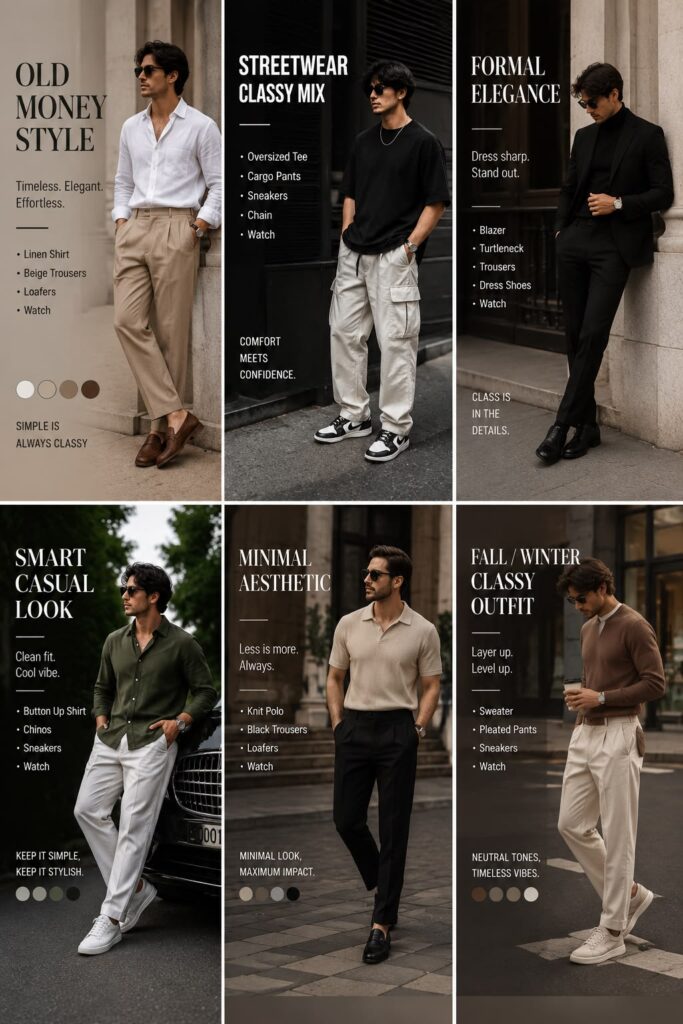
Every few years, fashion produces a question that’s really about money disguised as a question about clothes: buy less and spend more, or buy constantly and spend little? Right now that question has a name on each side — quiet luxury on one, fast fashion on the other — and the gap between them has never been more obvious.
Quiet luxury will not announce itself; it could be felt. It does not have any kind of oversized logos, no seasonal gimmick, just clothes which still from now to the end would always have an impact in the fashion industry. Fast fashion runs just on the opposite side of it with a cheap, constant, and new trend and outfit every week, whether you need anything new in your wardrobe or not they do not have any kind of impact they are just simple clothes without identity Huh.
Neither side is a trick. Both are business models, and both work — just for different people, at different points in their lives. Here’s what actually separates them, and which one is worth your money once you strip away the marketing.
What “Quiet Luxury” Actually Means:-
Quiet luxury isn’t a look you can buy off a rack in one trip — it’s closer to a standard you hold your closet to. The clothes read as expensive because the construction is good, not because there’s a name stitched somewhere visible.
Wear a cashmere sweater in camel that actually fits. A wool coat that’s already been having it from three past winters shows no sign of quitting. Leather shoes that look in better condition than a new one. None of it needs a logo to make its case.
A few things tend to define it:
Fewer pieces, chosen carefully, rather than a closet stuffed with things you reach past. Colors like — navy, white, beige, grey, cream, camel. Fabrics with some substance to them like wool, cashmere, linen, cotton, leather. Almost no visible branding. And a willingness to pay more once, instead of paying a little, repeatedly, forever.
People have gravitated toward this partly out of fatigue. There’s only so many times you can watch a $30 sweater pill after two washes before “cheap” stops feeling like a win.
What Fast Fashion Actually Is:-
Fast fashion runs on a single premise: whatever’s trending should be in stores within weeks, at a fraction of the original price. Brands track runways and social feeds, then turn the shapes they see into products almost immediately.
The pitch is easy to understand. You stay current without spending much. New arrivals every few weeks keep things interesting. And when a piece falls out of style — which it will, fast — you never paid enough for that to sting.
The mechanics behind it look roughly like this: production chases whatever’s popular right now, materials and labor get squeezed for cost, prices stay low enough for almost anyone, and new collections show up weekly in some cases rather than seasonally.
The catch isn’t the price. It’s the cycle sitting underneath it. You buy something, wear it a handful of times, watch it fade or lose its shape, and you’re shopping again — except this time you’ve forgotten how many times you’ve already done this. Priced per wear, it’s rarely the bargain it looks like at checkout.
Side by Side:-
| Comparison | Quiet Luxury | Fast Fashion |
| Quality | Real fabric, real construction | Cost-driven materials |
| Lifespan | Years, sometimes a decade | A season, if that |
| Design | Built to not date | Built around this month’s trend |
| Price | Expensive up front | Cheap up front |
| Waste | Lower — you buy less, longer | Higher — the whole model runs on turnover |
| Branding | Barely any | Often the entire selling point |
The real split isn’t the price tag. It’s what each purchase asks of you. One asks you to think first. The other is engineered to skip that step entirely — see it, want it, buy it, done.
Do the math on cost per wear and the gap gets uncomfortable fast: a $300 coat worn 200 times over five years lands around $1.50 a wear. A $25 top worn five times before it’s binned costs five dollars a wear. The luxury piece is “expensive” and still the better deal.
What You Actually Get From Dressing This Way:-
Going quiet luxury doesn’t just change your outfits — it changes your relationship with your closet, in ways that show up faster than most people expect.
Nothing you own is tied to a season, so nothing ages out on a calendar. Good fabric behaves differently over time — wool breathes, cashmere softens, linen gets more comfortable the more you wear it, while synthetics just start to look tired. A smaller set of pieces that all work together gives you more real outfit combinations than a packed closet where half of it doesn’t talk to the other half. You stop buying on impulse once your closet already has an answer for most situations. Less shopping means less waste, which is one of the few genuinely good byproducts of an otherwise self-interested choice. And clothes that actually fit tend to make you look more put-together without any extra effort on your part.
None of this requires being wealthy. It requires a passion that you hold which will help you in elevating your wardrobe and your style.
Why Fast Fashion Still Makes Sense for a Lot of People:-
It feels bad but for plenty of people, in plenty of situations, it’s the right call.
It’s affordable in a way quiet luxury simply isn’t for a lot of budgets. It lets someone who actually enjoys tracking trends participate without spending designer money. The sheer volume of options is hard to find anywhere else. It’s available almost everywhere, instantly. And for a one-off — a themed party, a costume, something you’ll wear exactly once — there’s no reason to buy quality clothes you’ll never use again.
The real problem with fast fashion was never the price. It’s that the entire business model depends on the clothes not lasting, so you come back. Once you notice that, it’s hard to un-notice it.
The Pieces Worth Actually Owning:-
If you’re moving toward quiet luxury, start with the pieces that hold up across seasons, occasions, and years without needing to be replaced.
- Shirts. A white Oxford does more work than anything else in your closet — it goes under a blazer, alone with jeans, tucked into chinos. Add a linen shirt for the summer season and a navy or white polo for the cool and normal weather which nothing else covers.
- Bottoms: you can wear a beige or khaki chinos, slim wool trousers in grey or charcoal colour for anything smart, casual to formal, and one pair of dark straight-leg denim pants.
- For outerwear, get a navy blazer first — the test is whether it looks right over a t-shirt and a dress shirt both, and a good one will. Then a wool coat in camel or charcoal, and a trench for the in-between seasons.
- Shoes: tan or dark brown penny loafers, black or dark brown Oxfords for anything formal, and Chelsea boots, which cross seasons better than almost anything else in a shoe rack.
- Round it out with a leather belt that actually matches your shoes, one analogue watch, and sunglasses that don’t try too hard.
Buy each of these once, buy them right, and they’ll outlast several fast-fashion wardrobes combined. That’s really what “luxury” means here — not status, just staying power.
Where Minimalism Fits In:-
Quiet luxury and minimalist dressing overlap more than they differ, though they’re not quite the same idea. Minimalism is about editing — cutting your closet down to what you actually use, refusing to buy something just because it was 40% off. Quiet luxury is more about what survives that edit: the quality and character of the pieces left standing.
Put them together and you get a wardrobe that’s both easier to manage and genuinely nicer to wear — a smaller, more curated set of things that all happen to go together, so getting dressed stops being a daily decision.
So Which One Should You Actually Choose?
There’s no single right answer here — it really comes down to your budget, your daily lifestyle, and whether shopping itself is something you actually enjoy doing.
Quiet luxury usually makes sense if you’re fed up with clothes having in rush, if you want to look neat and clear then you put-together no matter about what the situation is without overthinking about your outfit on each and every morning, if you’re building a wardrobe then you can have old money fashion which is a endless fashion trend than to have just a piece of cloth which will goes out of fashion trend in just few days or weeks.
Fast fashion usually makes more sense if you have a low budget and a tight pocket, if you are a moody person and want to enjoy some new trends rather than having something long lasting and endless fashion style, or if you need one specific item for an event which will not be worn again.
A quick way to decide just an activity is to think about your last five purchases. If most of them are still in your closet and still worn, quiet luxury will probably feel worth it. If most of them are gone or unworn within a year, that’s worth noticing too — it might mean the shopping itself is the part you enjoy, not necessarily keeping the clothes.
Honestly, most people land somewhere in the middle, and that’s not a cop-out — it’s the practical answer. Put your money into the foundational pieces — coat, blazer, shoes, a few good shirts — and let yourself be a little more careless with the one or two trend pieces you buy each season. That combination gets you most of the benefit of both approaches without forcing you to pick a side.
Mistakes Worth Avoiding Either Way:-
A few habits trip people up regardless of which side they lean toward:
Assuming price equals quality — plenty of expensive clothing is badly made, so check the fabric and the stitching yourself instead of trusting the tag. Buying the logo instead of the garment, which misses the entire point of paying more in the first place. Chasing every trend as it appears, when most of what feels essential today will feel slightly embarrassing in eighteen months. Ignoring how you actually care for what you own — even a great coat degrades fast if it’s washed wrong or left crumpled on a chair. Choosing ten mediocre pieces over three excellent ones, which almost never wins. And buying without any plan at all, which is how closets end up full of things that don’t actually go together.
Common Questions:-
What is quiet luxury fashion, really? A style philosophy that prioritizes timeless, well-constructed clothing in neutral colors, with little to no visible branding — quality and fit over trend-chasing.
Is it actually expensive? More upfront, less over time. A well-made and well fitted piece which is worn for years usually costs less per wear than something which is cheap which will be out of fashion trend in just some uses.
Is minimalism the same thing as quiet luxury? Related, not identical. Minimalism is about owning less. Quiet luxury is about the character of what you keep. Plenty of people do both without really separating them in their head.
Where should I actually start? A white Oxford shirt, a navy blazer, beige chinos, and a pair of penny loafers. These four pieces can alone make your style more good in most of the events and help you in making a good wardrobe than people expect.
The Bottom Line:-
Quiet luxury and fast fashion aren’t really two aesthetics — they’re two different relationships with money and time. One asks you to slow down and commit. The other is built for speed, and it delivers exactly that.
Fast fashion isn’t a mistake in every case. It has a real place, especially on a tight budget or when you’re testing a look before you commit to it properly. What it was never built to do is last.
Quiet luxury asks more of you upfront and gives more back over time — clothes that fit, that hold up, and that let you stop thinking about what you’re wearing because it’s already right. That’s the wardrobe actually worth building toward.
Start small. Pick one piece you can genuinely see yourself wearing for years, not months, and build outward from there — replacing the fast-fashion pieces one at a time as they wear out, not all at once. Eventually you end up shopping less, stressing less, and getting dressed with a lot more confidence than you started with.
